
Les lauréats de l’année

Le Prix 2026

Le Prix Franklin-Lavoisier 2026 a été décerné au
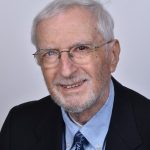
Professeur William R. Newman
historien des sciences, professeur distingué et professeur Ruth N. Halls au département d’histoire et de philosophie des sciences de l’Université de l’Indiana (USA).
>> Voir la vidéo de la remise du Prix et de la conférence du Professeur William R. Newman
Le Science History Institute, basé à Philadelphie, et la Fondation de la Maison de la Chimie, ont désigné William Royall Newman lauréat du Prix Franklin-Lavoisier 2026. L’historien des sciences américain est reconnu pour ses substantielles contributions à l’histoire de l’alchimie. Formé en tant que spécialiste textuel et médiéviste, ses ouvrages offrent des éclairages originaux sur les textes essentiels de la littérature alchimique, apportant des perspectives nouvelles sur plusieurs auteurs, dont l’alchimiste américain George Starkey et le physicien anglais Sir Isaac Newton.
En plus de ses publications scientifiques, Newman a également soumis les expériences alchimiques à l’épreuve du laboratoire. Sa collaboration étroite avec l’expert en histoire de l’alchimie Lawrence M. Principe — lauréat du prix Franklin-Lavoisier 2016 — confirme les transformations chimiques bien réelles que les alchimistes ont pu réaliser. En tant que co-auteurs de deux livres, ils ont plaidé pour le retour du terme archaïque « chymie » pour désigner de manière générale la pratique partagée par l’alchimie et la chimie des débuts de l’époque moderne. L’usage du mot est désormais largement reconnu, au point d’avoir été officiellement reconnu par l’Oxford English Dictionary.
Le Professeur Newman recevra une médaille d’argent spécialement fondue à cette occasion, et donnera une conférence lors d’une cérémonie au Science History Institute, à Philadelphie le 7 octobre 2026.
Biographie de William R. Newman
William « Bill » R. Newman a passé l’essentiel de sa carrière à l’Université de l’Indiana, où il a étudié les grands thèmes de l’histoire de l’alchimie. Dans son ouvrage de 1991, The Summa Perfectionis of Pseudo-Geber: A Critical Edition, Translation & Study, il a révélé la présence d’une théorie corpusculaire de la matière dans l’alchimie médiévale, qui a également constitué le fondement de son livre ultérieur, Atoms and Alchemy (2006). Newman y a mis en lumière la profonde influence de Geber sur l’atomisme de Daniel Sennert et sur la théorie de la matière de Robert Boyle, démontrant comment la philosophie mécaniste s’est appropriée et a transformé la théorie corpusculaire alchimique.
Un second thème central de l’œuvre de Newman est l’éclairage novateur que l’alchimie médiévale a apporté à l’idée occidentale traditionnelle de l’opposition entre l’art et la nature. Dans son ouvrage Promethean Ambitions (2004), Newman décrit différents intellectuels depuis le poète médiéval français Jean de Meun jusqu’à son compatriote, le céramiste Bernard Palissy, qui considéraient tous deux l’alchimie comme l’apogée de la prétention humaine à surpasser la nature, bien qu’ils soient parvenus à des conclusions opposées quant à sa valeur. Même Francis Bacon, le champion de la science expérimentale, a puisé son inspiration dans des exemples alchimiques pour affirmer que la nature diffère de l’art « non par la forme ou l’essence, mais seulement dans la façon dont il opère» (“not in form or essence, but only in the efficient »).
Un autre thème majeur de l’œuvre de Newman a été l’impact omniprésent de Jean Baptiste Van Helmont et de la tradition helmontienne sur le développement de principes cruciaux à la science expérimentale, tels que le concept d’équilibre des masses. L’influence marquante de Van Helmont apparaît dans la biographie de George Starkey parue en 1994, Gehennical Fire, ainsi que dans Alchemy Tried in the Fire (2002), coécrit avec Lawrence M. Principe (Johns Hopkins). Plus récemment, Newman a travaillé avec une équipe de chercheurs pour produire The Chymistry of Isaac Newton, une édition en ligne des manuscrits alchimiques de Newton. Cette édition a permis à Newman de jeter un éclairage substantiellement neuf sur les activités « chymiques » de Newton dans son livre de 2019, Newton the Alchemist.
Tous les lauréats







2026 laureates

The 2026 Franklin-Lavoisier Prize was awarded to
Professeur William R. Newman
historian of science, Distinguished Professor and Ruth N. Halls Professor in the Department of History and Philosophy of Science at Indiana University (USA).
>> watch the video of the prize and the lecture of Professeur William R. Newman
The Science History Institute and the Paris-based Fondation de la Maison de la Chimie announce William Royall Newman as the winner of the 2026 Franklin-Lavoisier Prize. The American historian of science is being recognized for his remarkable contributions to the history of alchemy. Educated and trained as a textual scholar and medievalist, his books offer groundbreaking insights into the essential texts of alchemical literature, shedding new light on several authors, including American alchemist George Starkey and English physicist Sir Isaac Newton.
In addition to his scholarly works, Newman has also put alchemical experiments to the test in the laboratory. His close collaboration with history of alchemy expert Lawrence M. Principe—winner of the 2016 Franklin-Lavoisier Prize—underscores the very real chemical transformations alchemists were able to execute. As coauthors of two books, they advocated for the return of the archaic term “chymistry” to refer broadly to the practice of alchemy and early modern chemistry. Usage of the word is now widely recognized and has even been officially acknowledged by the Oxford English Dictionary.
Newman will receive a specially cast silver medal during a ceremony at the Institute in Philadelphia on October 7, 2026, where he will also deliver a presentation.
About William R. Newman
William “Bill” R. Newman has spent most of his career at Indiana University, where he has investigated major themes in the history of alchemy. In his 1991 book, The Summa Perfectionis of Pseudo-Geber: A Critical Edition, Translation & Study, he revealed the presence of a corpuscular theory of matter in medieval alchemy, which also formed the foundation of his later book, Atoms and Alchemy (2006). There Newman charted the heavy influence of Geber on the atomism of Daniel Sennert and on the matter theory of Robert Boyle, showing how alchemical corpuscular theory was appropriated and transformed by the mechanical philosophy.
A second theme of Newman’s work is the striking focus that medieval alchemy provided to the traditional Western idea of competition between art and nature. Newman’s 2004 Promethean Ambitions describes figures ranging from the medieval French poet Jean de Meun to his later compatriot, the ceramicist Bernard Palissy, who both viewed alchemy as the apex of human claims to outdo nature, although they reached opposite conclusions about its value. Even Francis Bacon, the champion of experimental science, found inspiration for his claim that nature differs from art “not in form or essence, but only in the efficient,” in alchemical exemplars.
Yet another theme in Newman’s work has been the pervasive impact of Joan Baptista van Helmont and the Helmontian tradition on the development of principles crucial to experimental science, such as the concept of mass balance. Van Helmont’s prominent influence appears in Newman’s 1994 biography of George Starkey, Gehennical Fire, as well as in Alchemy Tried in the Fire (2002), coauthored with Lawrence M. Principe. More recently Newman has been working with a team of dedicated scholars (including Jim Voelkel, the Institute’s curator of rare books) to produce The Chymistry of Isaac Newton, an online edition of Newton’s alchemical papers. This edition made it possible for Newman to shed considerable new light on Newton’s “chymical” activities in his 2019 book, Newton the Alchemist.